

Hahnemann was dissatisfied with the state of medicine in his time, and particularly objected to practices such as bloodletting. He claimed that the medicine he had been taught to practice sometimes did the patient more harm than good: My sense of duty would not easily allow me to treat the unknown pathological state of my suffering brethren with these unknown medicines. The thought of becoming in this way a murderer or malefactor towards the life of my fellow human beings was most terrible to me, so terrible and disturbing that I wholly gave up my practice in the first years of my married life and occupied myself solely with chemistry and writing. After giving up his practice around 1784, Hahnemann made his living chiefly as a writer and translator, while resolving also to investigate the causes of medicine's alleged errors. While translating William Cullen's A Treatise on the Materia Medica, Hahnemann encountered the claim that cinchona, the bark of a Peruvian tree, was effective in treating malaria because of its astringency. Hahnemann believed that other astringent substances are not effective against malaria and began to research cinchona's effect on the human body by self-application.
Christian Friedrich Samuel Hahnemann was born in Meissen, Saxony, near Dresden. His father Christian Gottfried Hahnemann was a painter and designer of porcelain, for which the town of Meissen is famous. As a young man, Hahnemann became proficient in a number of languages, including English, French, Italian, Greek and Latin. He eventually made a living as a translator and teacher of languages, gaining further proficiency in "Arabic, Syriac, Chaldaic and Hebrew" Hahnemann studied medicine for two years at Leipzig. Citing Leipzig's lack of clinical facilities, he moved to Vienna, where he studied for ten months. After one term of further study, he graduated MD at the University of Erlangen on 10 August 1779, qualifying with honors. His poverty may have forced him to choose Erlangen, as the school's fees were lower. Hahnemann's thesis was titled Conspectus adfectuum spasmodicorum aetiologicus et therapeuticus [A Dissertation on the Causes and Treatment of Spasmodic Diseases].
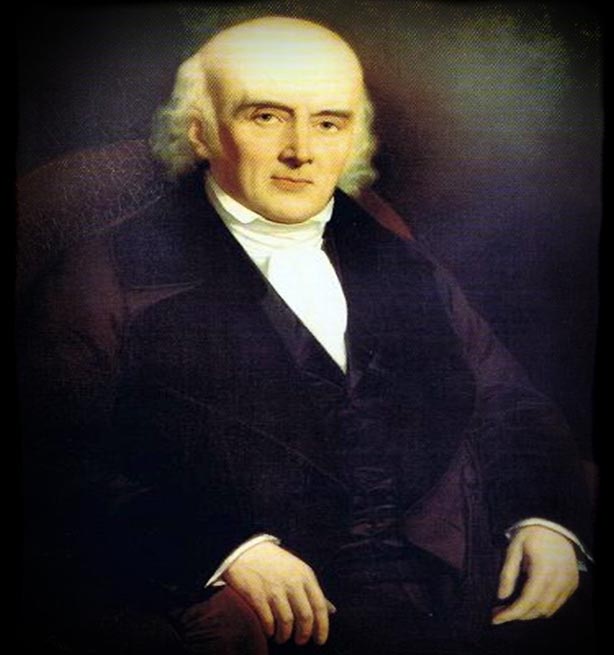
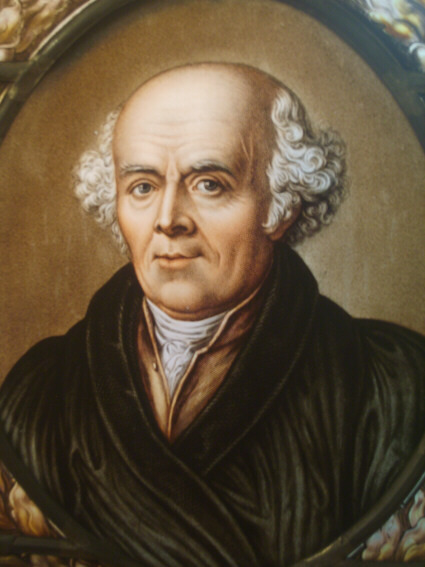
In 1781, Hahnemann took a village doctor's position in the copper-mining area of Mansfeld, Saxony. He soon married Johanna Henriette Kuchler and would eventually have eleven children. After abandoning medical practice, and while working as a translator of scientific and medical textbooks, he translated 15 books from English, 6 from French and 1 each from Latin and Italian from 1777 to 1806. Hahnemann travelled around Saxony for many years, staying in many different towns and villages for varying lengths of time, never living far from the River Elbe and settling at different times in Dresden, Torgau, Leipzig and Köthen (Anhalt) before finally moving to Paris in June 1835.


.png)


